Study Abroad Timeline for High School Graduates
Complete Guide for Study Abroad Timeline for High School Graduates

Planning to study abroad after high school is an exciting opportunity that requires careful preparation. Many students underestimate the amount of time needed to research universities, complete applications, prepare documents, and obtain student visas. Following a structured study abroad timeline can help high school graduates stay organized and avoid last-minute stress during the admission process.
A well-planned timeline allows students to meet application deadlines, improve standardized test scores, apply for scholarships, and make informed decisions about their future education. Starting early also provides enough time to compare universities, understand admission requirements, and prepare financially. This guide outlines a practical study abroad timeline for high school graduates who want to pursue higher education internationally.
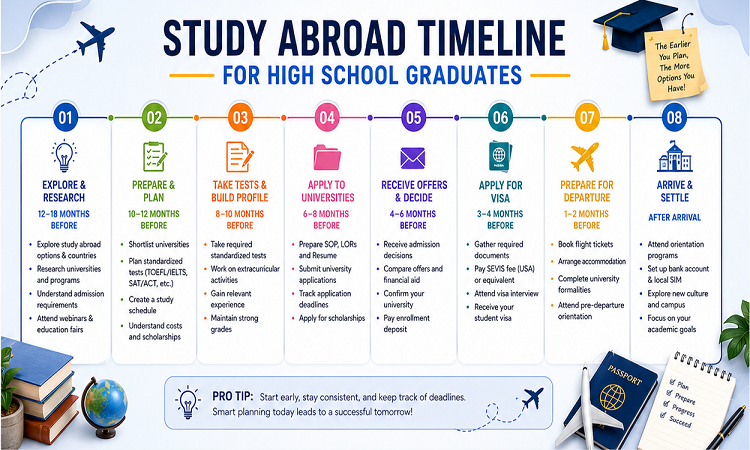
12 to 18 Months Before Enrollment: Research and Planning
The study abroad journey should ideally begin 12 to 18 months before the intended enrollment date. During this stage, students should research countries, universities, degree programs, and admission requirements. It is important to identify institutions that align with academic interests, career goals, and financial circumstances. Creating a shortlist of potential universities can simplify the application process later.
Students should also begin preparing for any required language proficiency or standardized tests. Exams such as English language assessments often require preparation and scheduling well in advance. This period is also an excellent time to explore scholarship opportunities, estimate study costs, and discuss educational plans with family members, teachers, or academic advisors.
6 to 12 Months Before Enrollment: Applications and Final Preparations
Once students have selected their preferred universities, they should begin preparing application materials. Common requirements include academic transcripts, recommendation letters, personal statements, study plans, and test scores. Submitting applications early can increase the chances of admission and provide more time for decision-making.
After receiving admission offers, students can focus on visa applications, accommodation arrangements, and travel planning. Gathering financial documents, securing health insurance, and attending pre-departure orientations are important steps during this phase. Proper preparation ensures a smoother transition to university life and reduces the risk of delays that could affect enrollment.
Important Milestones in a Study Abroad Timeline
- Research Universities and Countries
Begin exploring study destinations, university rankings, program options, admission requirements, and tuition costs. Early research helps students make informed decisions and identify institutions that match their educational goals. - Prepare for Language and Entrance Exams
Schedule and prepare for required exams such as English proficiency tests or university entrance assessments. Strong scores can improve admission prospects and scholarship eligibility. - Submit University Applications
Gather required documents, complete application forms, and submit materials before deadlines. Applying early often provides more flexibility and reduces unnecessary stress. - Apply for Scholarships and Financial Aid
Research available funding opportunities and submit scholarship applications as early as possible. Financial assistance can significantly reduce the overall cost of studying abroad. - Secure Visa and Travel Arrangements
After receiving admission confirmation, begin the visa process, book accommodation, purchase travel tickets, and prepare for departure to your study destination.
Frequently Asked Questions
1. When should high school graduates start planning to study abroad?
Students should ideally begin planning 12 to 18 months before their intended university enrollment date to allow enough time for preparation and applications.
2. What documents are usually required for study abroad applications?
Common documents include academic transcripts, passports, recommendation letters, personal statements, study plans, language test scores, and financial records.
3. How early should I apply for scholarships?
Scholarship applications should be submitted as early as possible, often alongside university applications, because many funding opportunities have separate deadlines.
4. When should I apply for a student visa?
Students should begin the visa application process immediately after receiving an admission offer and meeting all required conditions.
5. Is it necessary to take language proficiency tests?
Many universities require proof of language proficiency. Requirements vary by institution and country, so students should check admission guidelines carefully.
6. Can I apply to multiple universities at the same time?
Yes. Applying to several universities can increase your chances of admission and provide more options when making a final decision.
Conclusion
Following a structured study abroad timeline for high school graduates can make the entire application process more manageable and successful. Starting early allows students to research universities, prepare required documents, complete examinations, and secure financial support without unnecessary pressure. By carefully planning each stage—from university selection to visa approval—students can confidently transition from high school to international higher education. Proper preparation not only improves admission prospects but also helps create a smoother and more rewarding study abroad experience.