Study Abroad Packing List for Students: Complete Travel Guide
Study Abroad Packing List for Students

Preparing to study abroad is an exciting milestone, but packing for an international journey can be challenging. Many students worry about forgetting important items or bringing unnecessary luggage. A well-planned study abroad packing list helps ensure a smooth transition to your new destination while reducing travel stress. By organizing your essentials in advance, you can focus on your studies and enjoy your experience abroad from day one.
Every country has different weather conditions, cultural expectations, and living arrangements. Therefore, students should carefully research their destination before packing. Creating a comprehensive checklist can help you carry everything you need without exceeding airline baggage limits. This guide covers the essential items that every international student should consider packing before leaving home.
Essential Documents and Academic Materials
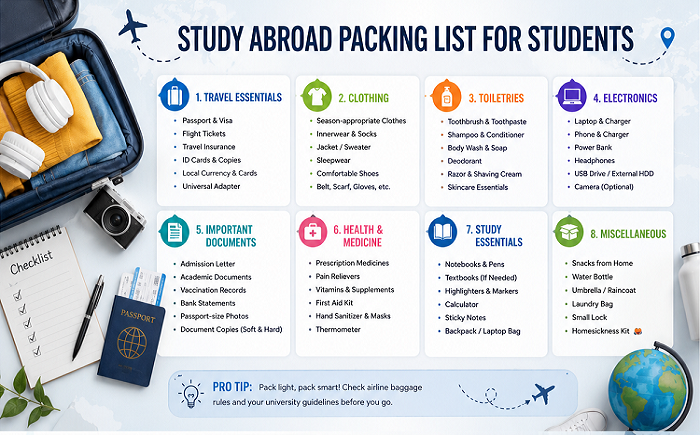
The most important items in your luggage are your travel and academic documents. Without these, you may face delays or complications upon arrival. Keep all essential paperwork in a secure folder that remains accessible during your journey. Important documents include your passport, student visa, university admission letter, accommodation details, travel insurance information, and emergency contact numbers.
Students should also pack academic materials that may be difficult to replace immediately after arrival. A laptop, chargers, notebooks, and digital copies of important records can help you stay organized. Consider saving important documents in cloud storage for additional security. Having both physical and digital copies of essential paperwork can provide peace of mind throughout your study abroad experience.
Pack Smart for Daily Life and Comfort
When choosing clothing, focus on practicality rather than quantity. Research the climate of your destination and pack appropriate seasonal clothing. Layering options are often ideal because they can adapt to changing weather conditions. Comfortable footwear, casual clothing, and a few formal outfits are usually sufficient for most international students.
Daily living essentials are equally important. Personal hygiene products, prescription medications, reusable water bottles, and basic first-aid supplies can help you settle in comfortably. However, avoid overpacking items that are readily available in your destination country. Bringing only the essentials can save luggage space and make your travel experience more convenient and manageable.
Important Items to Include in Your Packing List
- Travel and Identification Documents
Carry your passport, student visa, university acceptance letter, travel tickets, accommodation information, insurance documents, and emergency contacts. Keep originals and photocopies in separate locations to reduce risks associated with loss or theft. - Electronics and Study Equipment
Pack a reliable laptop, smartphone, chargers, power bank, headphones, and any required adapters. These tools support academic success and help you stay connected with family, friends, and university resources. - Weather-Appropriate Clothing
Choose clothing suitable for the local climate. Include comfortable daily wear, seasonal jackets, sleepwear, and a few formal outfits for presentations, networking events, or special university occasions. - Health and Personal Care Items
Bring prescription medications, basic first-aid supplies, glasses, contact lenses, and personal hygiene products. Ensure medications comply with customs regulations in your destination country before traveling. - Financial and Emergency Essentials
Carry some local currency, international payment cards, emergency contact details, and copies of important records. These items can be invaluable during your first days abroad while settling into your new environment.
FAQs (Frequently Asked Questions)
What should international students pack first?
Students should prioritize essential documents such as passports, visas, admission letters, insurance papers, and accommodation details before packing any other items.
How much clothing should I bring when studying abroad?
Pack enough clothing for the first few weeks and focus on versatile items. Most destinations offer affordable shopping options if additional clothing is needed later.
Should I bring all my textbooks from home?
Generally, it is better to wait until classes begin. Many universities provide digital resources, library access, or recommendations for required materials.
Do I need an international power adapter?
Yes. Different countries use different electrical outlets and voltage systems. A universal travel adapter is often a valuable item for international students.
Can I buy personal care products after arriving?
In most countries, personal care items are widely available. Bring only essential products for your first few days to avoid overpacking.
What should I avoid packing for study abroad?
Avoid carrying prohibited items, excessive clothing, large quantities of toiletries, or bulky objects that can easily be purchased after arrival.
Conclusion
A well-organized study abroad packing list for students can make the transition to international education smoother and less stressful. By focusing on essential documents, academic supplies, practical clothing, and daily living necessities, students can travel confidently and adapt more quickly to their new environment. Proper preparation not only helps avoid last-minute challenges but also allows you to fully enjoy the opportunities that studying abroad provides. Taking the time to pack wisely can contribute significantly to a successful and rewarding international student experience.